Wednesday, February 18, 2015

Apple's "Slide to Unlock"


Look familiar? This is Apple's iPhone/iPad lock screen interface. Apple has claimed legal rights to the "slide to unlock" concept through US 8046721 patent.

The first claim is simple: the method of unlocking a touch-sensitive electronic device is by moving a touch-sensitive display from one predetermined location to another predefined location. 

Essentially Claim 1 of this patent explains how exactly this unlocking method works.

---------------------------------------------------------------------------------------------------------------
Apple v. Samsung 2.0

However, Apple claimed that Samsung infringed on this patent, among other claimed features, leading to a head to head battle in courtrooms starting in 2014.
Apple alleged that Samsung copied:
  1. Slide to unlock
  2. Universal search
  3. Links within SMSes
  4. Autocorrect
  5. Background syncing
Lawsuits like such are primarily a result of broadly claimed software patents, in which the companies are claiming to have invented a lot more than the reality in an attempt to monopolize the entire market. It wasn't until later in 2014 when these disputes were settled. The U.S. court ruled that Samsung did not willfully infringe on Apple's "slide to unlock" patent, and Apple received $120 million in damages - a far cry from the $2 billion they asked for.


Underestimating Innovation


In the light of innovation and advancement, some people are very hesitant towards accepting change


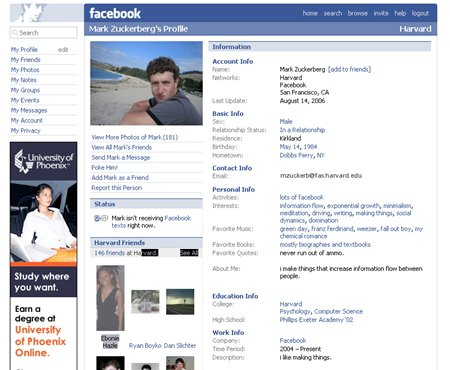
How many times have you nagged about a new Facebook layout? How do you feel about this then and now comparison?

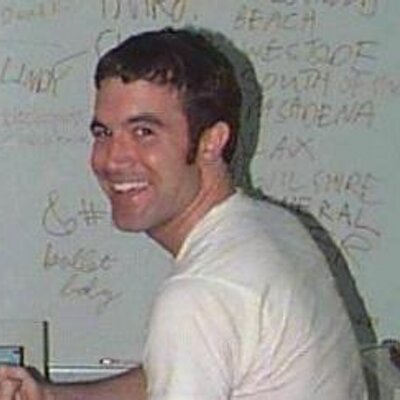
What ever happened to Tom?

I personally remember feeling reluctant to make the move from Myspace → Facebook.


Here's a list of impressionable quotes that went completely wrong.
Class Quotes
1. "I think there is a world market for maybe five computers." - Thomas Watson, Chairman of IBM, 1943

What do you think Watson would have to say today? IBM, a COMPUTER hardware company, and their chairman didn't have faith. But let's contextualize this - in 1943, we were near the end of World War II and the focus was on wartime products (e.g. rifles, engine parts). This is the problem with tunnel vision.

2. "There will never be a bigger plane built." - A Boeing engineer, after the first fight of the 247, a twin engine plane that holds ten people

The tragedy of this statement is how small this engineer was thinking. Engineers should know better - there is always room for improvement.

3. "The horse is here to stay but the automobile is only a novelty - a fad." - The president of the Michigan Savings Bank advising Henry Ford's lawyer not to invest in the Ford Motor Co., 1903

I bet he soon wished he, too, had invested in the Ford Motor Co. This is the problem I was drawing to with the Myspace/Facebook and layout change tension. People resist change: the horse worked, so why change something that's not broken? This investor failed to realize how the convenience achieved with the automobile could change the world and, furthermore, that luxury in one world can become a necessity in another.

4. "The world potential market for copying machines is 5000 at most." - IBM, to the eventual founders of Xerox, saying the photocopier had no market large enough to justify production, 1959

Yet again, another instance where IBM couldn't be more wrong. My takeaway here is do NOT doubt your ideas. If you are appropriately confident, then pursue your vision. 

5. "Everyone acquainted with the subject will recognize it as a conspicuous failure." - Henry Morton, President of the Stevens Institute of Technology, on Edison's light bulb, 1880

Morton was likely jaded from the many light bulb's developed in the years leading up to Edison's successful attempt. People WILL DOUBT you, they WILL TRY to DISCOURAGE you. Be strong, and be confident. Tenacity does pay off.


Additional Quotes
1. "The abolishment of pain in surgery is a chimera. It is absurd to go on seeking it... Knife and pain are two words in surgery that must forever be associated in the consciousness of the patient." - Dr. Alfred Velpeau, French surgeon, 1839

Sad, indeed. Just a couple of years later in 1842, Crawford W. Long documented the first successful general anesthetic. Imagine if doctors today had Dr. Velpeau's tone...

2.  "Men might as well project a voyage to the Moon as attempt to employ steam navigation against the stormy North Atlantic Ocean." - Dr. Dionysus Lardner, Professor of Natural Philosophy and Astronomy at the London University College

Dr. Lardner, you may have been on to something there... Sometimes we make these remarks that are seemingly ludicrous at the time, but they may turn out to be completely valid in the future. I can see us laughing one day about how foolish we were to dismiss the feasibility of teleportation.

3. "Airplanes are interesting toys but of no military value." - Marshal Ferdinand Foch, French military strategist, 1911

Interestingly enough, a year later Foch became a World War I commander. However, by the time WWII came around, aircraft had advanced to the point in which it started to become a major game changer in war.

4. "Computers in the future may...perhaps only weigh 1.5 tons." - Popular Mechanics, 1949

1.5 tons - today the lightest laptop weighs in at 1.72 pounds.  

5. "There is no likelihood man can ever tap the power of the atom. The glib supposition of utilizing atomic energy when our coal has run out is a completely unscientific Utopian dream, a childish bug-a-boo. Nature has introduced a few fool-proof devices into the great majority of elements that constitute the bulk of the world, and they have no energy to give up in the process of disintegration." - Robert A. Millikan, in his speech to the Chemists' Club, 1928

Millikan, Rutherford, and Einstein all vehemently believed the atomic bomb to be impossible. The front-runners in physics and chemistry denied its plausibility. 


Monday, February 9, 2015

The Product Developer to the Patenter


So this semester I'm taking a New Product Development course, and I got curious about how the development timeline aligns with the patent timeline.

The diagram above is a very traditional product development chart, detailing each phase individuals or a company typically go through. Now I won't go into the details of each phase, but where does the 'patenting' occur? Does that occur at the start of the timeline, the end, or is it even on here? 

For first, the United States patent laws do not require you to have a prototype, so this crosses out the later half of the mentioned phases. What are the risks we take by patenting an idea before we've given ourselves the chance to test it out? Are we so hasty in this day and age to jump into the riches that we rush the process? Jumping the gun on submitting your patent will open the public's eyes to a great idea you may have, but the last thing we would want is our competitor to have a clear look at our foggy vision.

So now I ask, what do you think is the best way to approach this process?


Here is a short video clip of me talking about the Product Development phase to Patenting. Enjoy!


Top 10 Inventions 2.0

After a bit of crowd-sourcing, I reconsidered my list of Top 10 Inventions

- I decided to add 'Refrigeration' into my list as a result of its astounding impact on cookery
  1. Knife
    • When? Around 2.5 million years ago
    • Why? Our ancestors were able to both hunt and defend with the knife. Knives were originally made from rocks and have within the recent few thousand years been advanced due to metallurgy. This tool easily has made the greatest impact on civilization.
  2. Language
    • When? Hot debate! No one knows for certain how long ago language first developed.
    • Why? Language is a broad idea - this includes Latin, English, Chinese, and even math and music. Without language, our civilization struggled to communicate ideas, create organizational structures, tell tales, etc. Our ancestors grew more advanced by creating the opportunity to use language in order to delegate tasks and pass down moral lessons.
  3. Wheel
    • When? 5000 B.C.
    • Why? The wheel has revolutionized the way humans traveled and transported various goods. It is a great invention because the only naturally occurring round shapes are at the microscopic level; therefore, this is no humble invention.
  4. Sewage System
    • When? 3500 B.C.
    • Why? The development of this piping system eliminated wastes from cities, decreased the spread of disease, and ultimately brought sources of clean water as the technology advanced.
  5. Antibiotics
    • When? 1928 by Alexander Fleming
    • Why? Fleming made the discovery that penicillin can kill the staphylococci bacteria. This discovery has opened grand avenues for drug treatment and aided in prolonging human life.
  6. Contraceptives
    • When? 1564 "by" Gabriello Fallopius. Although the idea of contraceptives has been around since the start of man, Fallopius officially developed the male barrier method.
    • Why? Contraception has reduced the transmission of venereal disease and aided in family planning.
  7. Refrigeration
    • When? 1805 by Oliver Evans and 1834 by Jacob Perkins
    • Why? With the invention of artificial refrigeration, we were able to preserve foods much longer and avoid salting meats in order to keep them from spoiling. This brought about more economical and healthy food options.
  8. Light bulb
    • When? 1879 by Thomas Edison
    • Why? After the discovery of electricity by Thomas Jefferson, a great invention was the incandescent lamp. The illumination of the night increased productivity by allowing us to work at night, decreased fire hazards from fire-lit candles, and helped reduce crime rates in the streets.
  9. Genetic Modification Technology
    • When? 1973 by Stanley Cohen and Herbert Boyer
    • Why? The invention of DNA cloning has led to our ability to genetically modify organisms, perform gene therapy, clone animals, and sequence the human genome. This allows us to work on eliminating genetic diseases and prolonging human life.
  10. The Internet
    • When? Around the late 1950's the Internet began to form through a collective effort
    • Why? The Internet has drastically changed the way we carry out day-to-day tasks, run businesses, and has unprecedentedly globalized our world.


Here is a short video presentation on my updated Top 10 Inventions list. Enjoy!


Sunday, February 8, 2015

Top 10 Inventions

I have made a list of what I would consider to be the Top 10 Inventions of time!
  1. Knife
    • When? Around 2.5 million years ago
    • Why? Our ancestors were able to both hunt and defend with the knife. Knives were originally made from rocks and have within the recent few thousand years been advanced due to metallurgy. This tool easily has made the greatest impact on civilization.
  2. Language
    • When? Hot debate! No one knows for certain how long ago language first developed.
    • Why? Language is a broad idea - this includes Latin, English, Chinese, and even math and music. Without language, our civilization struggled to communicate ideas, create organizational structures, tell tales, etc. Our ancestors grew more advanced by creating the opportunity to use language in order to delegate tasks and pass down moral lessons.
  3. Wheel
    • When? 5000 B.C.
    • Why? The wheel has revolutionized the way humans traveled and transported various goods. It is a great invention because the only naturally occurring round shapes are at the microscopic level; therefore, this is no humble invention.
  4. Sewage System
    • When? 3500 B.C.
    • Why? The development of this piping system eliminated wastes from cities, decreased the spread of disease, and ultimately brought sources of clean water as the technology advanced.
  5. Antibiotics
    • When? 1928 by Alexander Fleming
    • Why? Fleming made the discovery that penicillin can kill the staphylococci bacteria. This discovery has opened grand avenues for drug treatment and aided in prolonging human life.
  6. Contraceptives
    • When? 1564 "by" Gabriello Fallopius. Although the idea of contraceptives has been around since the start of man, Fallopius officially developed the male barrier method.
    • Why? Contraception has reduced the transmission of venereal disease and aided in family planning.
  7. Light bulb
    • When? 1879 by Thomas Edison
    • Why? After the discovery of electricity by Thomas Jefferson, a great invention was the incandescent lamp. The illumination of the night increased productivity by allowing us to work at night, decreased fire hazards from fire-lit candles, and helped reduce crime rates in the streets.
  8. Telephone
    • When? 1870 by Elisha Gray/Alexander Graham Bell
    • Why? The telephone transformed communication, bringing forth immediacy and the start of efficient globalization.
  9. Genetic Modification Technology
    • When? 1973 by Stanley Cohen and Herbert Boyer
    • Why? The invention of DNA cloning has led to our ability to genetically modify organisms, perform gene therapy, clone animals, and sequence the human genome. This allows us to work on eliminating genetic diseases and prolonging human life.
  10. The Internet
    • When? Around the late 1950's the Internet began to form through a collective effort
    • Why? The Internet has drastically changed the way we carry out day-to-day tasks, run businesses, and has unprecedentedly globalized our world.

Here is a short video presentation on my Top 10 Inventions list. Enjoy!


About Me

My name is Sasha Rassoli, and I am in my final semester as an undergraduate here at UC Berkeley studying Bioengineering. I am interested in biomedical devices but more importantly anything that will help improve the quality of lives for people all around the globe.
                The way I got involved in this course is a bit odd, but I believe it was almost a blessing of sorts. I needed to take 5 more units in order to be considered a full-time student, and I was hoping to fill those last units with DeCal and research credits. I hadn't realized that those units are capped until the start of the second week of classes. I momentarily panicked – I was one unit away from “full-time” status and had no idea what course of action to take. I searched on Berkeley Time, a helpful website that has compiled course offerings and ratings into one platform, to find any 1-2 unit classes. I specifically wanted to keep my workload down because I knew my time this semester would be filled with job hunting, studying for the GRE, and preparing myself for the real world.
                This course ended up being the only one I found to have many positive ratings and to be engineering-related. As engineers, we are creative – with the right knowledge and means, we have the ability to create a product/concept that is unique and marketable. Unfortunately, many engineers have never taken the time to equip themselves with this knowledge – the know-how. My father, a mechanical engineer, has several patents, but I never knew what that really meant. I have seen patent listings, but I have never been quite sure how to make full sense of them. Lastly, and most importantly, I do not know the process and involvement of filing for a patent. What similarities to existing concepts can we get away with when filing for our own patent, and why is it that sometimes individuals and big businesses opt of out patenting an idea? What exactly can I patent? These are all questions I hope to have answered by the end of our semester.


Although the original reason of why I signed up for this course may seem vain, I honestly think myself to be lucky. That sense of urgency pushed me to find a course that is likely to be the most relevant in my field of work and in the real world. I am so glad that I was able to find a truly pertinent and interesting course for my last semester at UC Berkeley!